Marc writes from a TV production company called Ricochet. He says:
we are currently producing the fifth series of No Going Back and I
am looking for people who are selling up in the UK and moving
abroad to start a new business venture. I would love to hear from
anyone who is doing something along these lines. Please contact him
on marc.lewis@ricochet.co.uk
Category: archive
-
Flag Quiz
Which countries are represented by these flags? For the answers,
see at the end of the eNews.
-
Hiking the Appalachian Trail from New York City By Susan Velasquez
Luckily there are many ways to go hiking over the weekend and most
of them are accessible by train or bus from New York City. Possibly
the most famous trail of all is the Appalachian Trail, which starts
in Georgia and goes all the way up to Maine. But for day trips or a
hike of a few hours, you can take a bus or train from the city.The most popular way to get there is by train from Grand Central
Station. There are two early morning trains that run on weekends
only. The train will drop you off at a tiny station (Appalachian
Trail station) that runs right through the trail. The walks North
or South along the trail are both picturesque, but the South walk
is possibly less strenuous and better for beginners. You first walk
along planks through a swampy area. Then you enter a lovely forest
area. Suddenly the forest ends and you are out in the open, in the
middle of fields and farms. Walk along the sides of farms and you
can wave hello to the cows and horses that inhabit them. The
backdrop to these fields and farms are gorgeous mountains, which
are especially picturesque in the autumn months when the colours of
leaves change. Bring a camera as there are some lovely photo
opportunities. Then cross the road and enter another forest area;
but this one feels different to the last. You will see new
types
of plants and trees in this area. So the walk is a real feast for
the senses and the trail keeps taking you through different terrain
and landscapes. You can hike for either 3 hours or 5 hours before
you have to get back to the tiny station for your return train to
the city.It is also possible to take the Metro North train to Cold Spring
train station. There are many trails within walking distance of the
train station but for the Appalachian Trail you have to go into the
sports store near the station. It is one of the first stores you
will see along Main Street when you leave the end of the platform.
For a small fee, they provide shuttle service to the trail. It
would be wise to book ahead but on weekends they have regular
service for the many hikers that enjoy the area, especially in the
warmer months. You are dropped off at the trail head and they pick
you up at a specified time later in the day. The trains back to New
York City run every hour.Another route would be to take the bus to the Appalachian trail
from Port Authority Bus Terminal (there is a bus that goes to Bear
Mountain as well as to the Military Academy across the Hudson
River). It is a 2-3 hour ride, but the bus leaves you right at the
trail and then you have a few hours to hike before getting the bus
back to New York. There are toilet facilities in Bear Mountain
State Park, and also places to buy drinks or snacks. The
Appalachian Trail runs directly through the park and there are also
several other enjoyable trails in the area, including one around a
large lake that is very picturesque.Still another possibility is to take a bus from Port Authority to
the Delaware Water Gap in Pennsylvania. The Gap is right on the
border of Pennsylvania and New Jersey and the Appalachian Trail
runs right through the town there too. It is a 2-3 hour ride and a
short walk from the bus station through the middle of town to the
trail itself. The town has a few shops and places to eat, and even
trolley tours of the area (during the warm months only). Again, you
can spend several hours exploring the area and hiking the trail
before returning to New York City.There is little excuse not to hike the famous trail and enjoy all
the benefits of a walk in the woods. A tranquil break from the
hustle and bustle of the Big Apple is always welcome.
-
Sun at Midnight
Sun at Midnight is a book by Rosie Thomas, due to be published in
July 2005 by Harper Collins. The book is based around her stay on a
research station in Antarctica. We wanted to include a brief
account of Rosie and her forthcoming book to give inspiration to
other aspiring authors. It is only in recent years following a
divorce and her children finding their own way in the world has
Rosie had her life to herself. Travelling across deserts, partaking
in international car rallies and scaling high mountains are so much
easier without the family baggage. Once she was established as a
successful writer and her children were grown, she discovered a
love of travelling and mountaineering. She has climbed in the Alps
and the Himalayas, competed in the Peking to Paris car rally, and
spent time on a tiny Bulgarian research station in Antarctica to
research this novel. Woman and Home magazine said this of Praise
for SUN AT MIDNIGHT: 'This is an epic love story set against
breathtaking descriptions of Antarctic waste.' Look out for it!Link:
http://www.harpercollins.com/
-
Where and When to see Whale Sharks Picture by Hondonius Aurelius
The Whale shark (Rhincodon Typus) is the largest fish in the world,
growing up to 12m (40 feet) in length. Though massive in size, whale sharks are
completely harmless and feed on plankton and small fish which are
filtered from the water as they cruise the world's oceans.
Despite their size, whale sharks are remarkably gentle and curious.
They have a slow growth rate, only reaching maturity at around 30
years old and living as long as 60 – 100 years. Their reproduction
rate is also very slow – long intervals between pregnancies and
producing around a few hundred pups at one time.Whale Sharks are located near the Equator around coast lines and
open seas. They swim mostly along the top of the surface. Whale
sharks can be found in the following areas:-
Western Atlantic: New York to central Brazil and including Gulf
of Mexico and Caribbean. -
Eastern Atlantic: Senegal, Mauritania, Cape Verde Islands, Gulf
of Guinea. -
Indo-West and Central Pacific: South Africa and Red Sea to
Pakistan, India, Sri Lanka, Malaysia, Thailand, China, Japan,
Philippines, Indonesia (Kalimantan, Java, Irian Jaya), Papua New
Guinea, Australia (Queensland, Northern Territory), New
Caledonia, Hawaiian Islands. - Eastern Pacific: Southern California to northern Chile.
-
Indian Ocean: the Seychelles, Mauritius, Zanzibar, Madagascar,
Mozambique and northernmost Natal.
Unfortunately, in some countries such as India and the Philippines,
the whale shark is often hunted for meat which is sold to feed the
rich in SE Asia, where whale shark meat is an expensive delicacy.
Numbers have certainly been reduced, but with the migratory habits
of the sharks, it is very difficult to track and count them.February to May: The time of year to see a whale shark in Thailand
is between February and May.April to June: Whale shark sightings are extremely common on the
Ningaloo Reef in the months of mid April-June. A spotter plane
communicates with boats as it spots the large shadow of a whale
shark near the surface. Interactions are regulated by CALM
(Conservation and Land Management), which limits the number of
snorkellers in the water with a shark to a maximum of 10 and does
not allow the use of flash photography. There are also strictly
regulated guidelines including the distance a snorkeller should
stay from the animal and how long a single interaction with a whale
shark may last. These measures are mainly to reduce stress to the
sharks, another unknown factor for scientists, even though people
have been interacting with whale sharks on the Ningaloo for many
years.April to June: southern Belize offers whale shark spotting
opportunities. The best time to do so during these months are three
days before the full moon to three days after the last quarter
moon. It's during these times that the Cubera Snappers spawn,
attracting the Whale Sharks.July to September: Rarely seen in shallow coastal waters, whale
sharks have been regular visitors to the Sea of Cortez near Bahia
de Los Angeles, Baja California, Mexico are closest to the US and
are a good place to encounter whale sharks at this time of year.November to April: whale sharks can be seen around Richelieu Rock
in the North Andaman Sea.If you have had a whale shark encounter, the Beetle would love to
hear from you!
-
Western Atlantic: New York to central Brazil and including Gulf
-
Armenia – a Cradle of Civilisation by Mushegh Gevorgyan
Where is Armenia? Armenia is the smallest of the former Soviet
republics, bounded by Georgia to the north, Azerbaijan to the east,
Iran to the south, and Turkey to the west. Aremenia counts amongst
one of the world's oldest civilizations and once included Mount
Ararat, (now in modern day Turkey) the mountain identified in the
bible as being where Noah's ark rested after the flood. Under
Tigrane the Great (fl. 95-55 B.C.) the Armenian Empire reached its
height and became one of the most powerful in Asia, starching from
the Caspian to the Mediterranean Seas. Throughout most of its long
history, however, Armenia has been invaded by a succession of
conquerors- the Greeks, Romans, Persians, Byzantines, Mongols,
Arabs, Ottoman Turks, and the Russians.From the 16th century through to World War I, significant parts of
Armenia were controlled by the Ottoman Turks, under whom they
experienced discrimination, religious persecution, heavy taxation,
and armed attacks. In response to Armenian nationalist stirrings,
the Turks massacred thousands of Armenians in 1894 and 1896. After
the Turkish defeat in World War I, the independent Republic of
Armenia was established on May 28, 1918, but survived only until
November 29, 1920, when it was annexed by the Soviet Army. On March
12, 1922, the Soviets joined Georgia, Armenia, and Azerbaijan to
form the Transcaucasian Soviet Socialist Republic, which became
part of the U.S.S.R. In 1936, after a reorganization, Armenia
became a separate constituent republic of the U.S.S.R.Armenia declared its independence from the collapsing Soviet Union
on September 23, 1991. An Armenian Diaspora has existed throughout
the nation's history, and Armenian emigration has been
particularly heavy since independence from the Soviet Union. An
estimated 60% of the total eight million Armenians worldwide live
outside the country, with one million each in the U.S. and Russia.
Significant Armenian communities are located in Georgia, France,
Iran, Lebanon, Syria, Argentina, and Canada.Armenia – acknowledged as one of the cradles of civilization – is a
beautiful country with a sophisticated people and a long and
cultured history. As a result, Armenia is an intriguing tourist
destination. Numerous monuments and masterpieces of the Ancient era
and Middle Ages can be found throughout the country. Tourism in
Armenia is rooted in the country's historical landmarks and
natural attractions such as the water resorts of Lake Seventh hot
springs of Arzni and Jermuk, the forests of Dilijan, Aghveran,
Tsaghkadzor, Bjurakan and Gugark, and the mountainous natural caves
and cliffs of the Southeast region. The 5165 meter Mount Ararat,
geographically located in Turkey, is a national symbol of Armenia
and is visible from much of the Southwest region.
 The majestic peaks of Mount Ararat provide a stunning
backdrop to Yerevan. The monastery of Khor-Virab and the ruins of
the ancient city of Dvin (dating back to the second century BC) are
located in the mid-distance Aerial view of Yerevan, capital of
Armenia Statue of Komitas, one of Armenia's most loved
composers, outside the Komitas Conservatory. Apart from writing
many original composition, Komitas travelled the country noting
down folk songs for posterity Yerevan, which is nestled in the
shadow of the snow-capped heights of the majestic mount Ararat,
where the Biblical Noah's Ark first landed escaping the Great
Flood, is the capital city of Armenia. With a population numbering
over 1.2 million, Yerevan is a bustling city. The central plaza,
Republic Square, is designed in the Armenian national style and
houses the Government House, the Cabinet and other governmental
offices as well as the Erebuni and Armenia hotels.Also situated on Republic Square are the Armenian History Museum
and the Art Gallery of Armenia. Here, one finds informative and
interesting models and artefacts of ancient Urartu and Armenia. In
the Art Gallery one finds a worthy section on Armenian art from the
seventh century AD. Amongst the many other museums in the capital
city, the two most interesting house museums are those of landscape
artist Martiros Saryan (1880-1972) and twentieth century composer
Aram Khatchaturyan.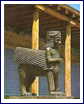 Yerevan, the ancient capital of Armenia, extends you a
warm and friendly welcome. It is one of the oldest cities in the
world. The earliest recorded settlement there dates back to 782 BC.
King Argishty I founded a fortress city in the north-eastern part
of present-day Yerevan, with the following cuneiform inscription,
“With the majesty of God Khald, Argishty, son of Menua, built
up this inaccessible castle and named it Erebuni…” You can
still see relics from this part of our history at the Erebuni
Museum in Yerevan.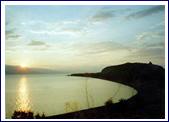
As you explore the many interesting sights in Yerevan, you will
learn about the culture and history of one of the world's
oldest nations.If you would like more information about Armenia, contact the
author of this article, Mr Mushegh Gevorgyan, who can assist with
tours, visas and translation services: tours@orient.am