Vacation Dreams

Tag: February 2003

  • Free London Museums: Museum of Childhood

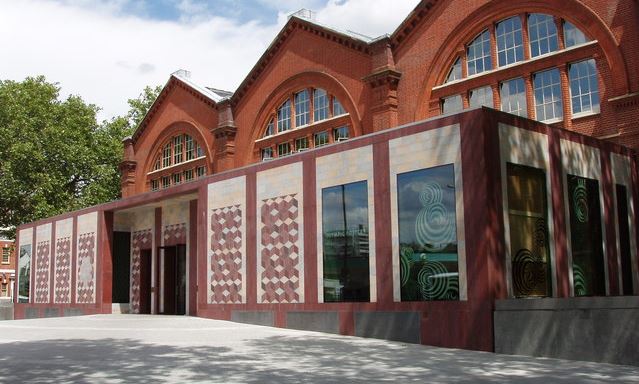
    Museum of ChildhoodTeddy Bear Centenary in London: the centenary of the teddy bear is being celebrated with a major exhibition at London’s Museum of Childhood, Bethnal Green (March 29 – December 31).

    The exhibition features about 400 bears, from some of the oldest surviving examples to present-day models, plus ‘celebrity’ bears such as Winnie the Pooh, Paddington, and Aloysius from the TV series “Brideshead Revisited”.

    The Museum of Childhood is a branch of the Victoria
    & Albert Museum. It is open daily except Friday. Admission free (Some events carry a separate charge).

    Tel: 0208 983 5200.

    Website: Museum of Childhood

    First Published: Feb 27, 2003

    Upcoming exhibitions include:

  • Batik Making by Richard Densham

    It has certainly been an interesting month here in Mikindani, and also
    in Dar es Salaam. One of Trade Aid’s new ideas for Mikindani is
    to start up a local group who can produce Batik T-shirts. But what is
    this I hear you ask. Batik T-shirt printing is the dying of a T-shirt
    with certain areas left undyed, this enables you to produce a variety
    of patterns.

    It was at the beginning of December that the journey up to Dar began,
    at the oh so sociable hour of four o’clock in the morning. After
    a back breaking sixteen hours in one of the Trade Aid Landrovers, being
    bounced and battered along a Tanzanian “road” we finally arrived
    in Dar Es Salaam, oh what a relief. After a day to settle in, and make
    extensive use of the bar and air conditioning at the Seaman’s mission
    [where we were staying] it was down to work. My brief was to look into
    the process of Batik T-shirt production, and to see if it would be feasible
    in Mikindani.

    The Batik T-shirt printing takes place in an indoor market/shopping
    centre where the products are also sold. There I met the head of the organisation
    that prints the T-shirts and the head of production, who oversees the
    entire process.

    The process begins when the parts of the T-shirt that are not to the
    dyed are covered in a special sort of wax. This can be applied through
    two methods, either using a brush or a wooden print. As far as Mikindani
    and the Boma is concerned it is my opinion that the print method would
    be the best, as it would produce work for the local carpenters.

    Once the wax has been applied and dried the T-shirt is then dyed. A
    mixture of hot and cold water (17 litres) dye, caustic soda and sodium
    powder are then mixed together in a stone bath. The T-shirt is then repeatedly
    lifted in and out of this mixture until the dye has fully soaked into
    the material. After which it is then taken out of the water and hung to
    dry. The wax then has to be removed; this is done by placing the T-shirt
    into a vat of boiling water, where it is then stirred around until all
    of the wax has been removed. The T-shirt is then finished and can either
    be worn, or more colours can be applied by using the wax to cover the
    previous dyed areas and any areas that need to be left clear. This should
    certainly prove to be something that Trade Aid and the Boma can make good
    use of, and it should also benefit the local groups who can get involved.

    For more information on the work carried out by Trade Aid in Tanzania,
    see their website www.mikindani.com


  • Deaths in Congo

    If you were thinking of travelling to northern Congo
    to see the gorillas – don’t. At least 48 people are believed
    to have died in a suspected outbreak of Ebola in the north of Congo-Brazzaville,
    near the border with Gabon. Ebola is reported to have killed 43 people
    in Congo and 53 others in neighbouring Gabon between October 2001 and
    February 2002. The WHO says more than 1,000 people have died of Ebola
    since the virus was first identified in 1976 in western Sudan and in a
    nearby region of Congo. There is no cure for Ebola, which causes up to
    95% of its victims to bleed to death.

    The authorities were first alerted to a possible outbreak
    of Ebola when a clan of gorillas in the region began to die in December.
    Tests carried out on the bodies confirmed that the gorillas had died from
    the Ebola virus, which has now claimed more than 80% of that gorilla clan.
    According to on the scene World Health Experts, it seems likely that eating
    bush meat such as gorilla, gazelle and antelope caused the human deaths.


  • Travel Advice Corner

    Anna and Magda wrote in asking for help with voluntary placements in
    Australia: we are two girls living in Germany, age 19, just finished our
    A-levels (Advanced school leaving certificate). Our reason for writing
    is, that we would like to do a voluntary practical year in Australia.
    WE would be very grateful if you could give us further help in this. Best
    regards Anna and Magda.

    The Beetle responds: As you are both under 30, you are most likely eligible
    to apply for a working visa in Australia. So maybe if you contact the
    Australian embassy in your country, they can advise you about this. Roughly
    speaking, you are not allowed to do a “professional” job, so
    you are only allowed to do casual work such as potato, fruit picking or
    short term work. No one piece of work can be over 3 months either.

    The Beetle suggests that you search on the internet using the words
    “voluntary work Australia”. This is a good site to start with:
    Volunteer Search in addition,
    the April 2002 Globetrotter e-newsletter 2002 had an article by conservationvolunteers
    email conservationvolunteers
    about conservation volunteer opportunities. There’s also always
    the WWOOF organisation, see: Wwoofing, which caters for people who
    want to work on organic farms. There’s also:

    Working Holiday MakersAustralian Department of Immigration
    and Multicultural Affairs.

    ATCV (Australian
    Trust for Conservation Volunteers) accepts Australian and foreign volunteers
    for a wide range of conservation projects throughout Australia.

    Australian Jobs Guide by Nomads World features visa information,
    job packages, agencies and a harvest guide for fruit picking/harvest work.

    Diving in Australia has an employment database.

    Pelican Point Windsurfing in W. Australia has employment
    opportunities for instructors.

    The Cape Tribulation
    Tropical Research Station
    accepts volunteers for conservation projects.

    Travel Jobs Network,
    a service for Australian and New Zealand job seekers.

    TNT Magazine
    has an excellent section on finding temporary work in Australia.

    ~~~~~~~~~~~~~

    The Beetle received an e-mail from the parent of a college student,
    studying in L.A. They wanted to know where their daughter and two friends
    could go on an inexpensive package for their spring break April 12-18,
    2003. Hawaii maybe?

    The Beetle agreed that Hawaii, (but not Oahu – which can be a
    little touristy and expensive, when the other islands have far more to
    offer) would be a great option. It is possible to buy reasonably priced
    fly drive holidays around the Hawaiian islands, where our reader’s
    daughter and friends could share a room at a very nice hotel at a good
    price. With only 6 days, I would recommend either the Big Island alone
    or alternatively split between Kauai and the Big Island. If a car and
    swish hotel is too expensive, then it is possible to find moderately priced
    accommodation on the Big Island, so this should cut the cost, but a car
    is definitely a must!


  • Low-cost London

    A new booklet from the London Tourist Board gives suggestions
    on making your holiday budget go further and exploring the capital off
    the main tourist trail. “Go Further in London” is available
    free from British Tourist Authority offices overseas (in English, French,
    German and Italian), or look on the website: www.visitlondon.com


  • A visit to Durban by Geoff Fairman

    Today we will visit Durban which is a city situated on the east coast
    of South Africa. It has a sub tropical climate opposed to that of Cape
    Town, which is Mediterranean.

    What has Durban to offer the tourist or visitor? Along the beach front
    are many hotels and blocks of holiday flats. This area is called the Golden
    Mile.

    Hotels on the beachfront have magnificent views over Durban Bay and
    the Bluff to south. Along Durban's beaches jetties have been built
    out into the sea. They have the effect of turning the long golden beaches
    into small bays, which can be protected by lifeguards during the holiday
    seasons.

    Durban is well known for its sharks. All the beaches are protected by
    shark nets that have been installed about 300 metres off shore on the
    outside of the breaker line. It is very interesting to watch the Natal
    Sharks Board out in the bay each morning tending the nets and removing
    any fish that have become entangled during the night. If they are still
    alive they are released otherwise they are taken to the shark boards offices
    to the north of Durban where they are dissected for research purposes.

    The “ Golden mile” is always a hive of activity with the
    many restaurants, pubs and bars to be visited. At night many people come
    down to the beaches to relax and enjoy the atmosphere or just to party.

    Durban is also famous for it Rikshas. A Riksha for those who don't
    know is and African man who wears a very fancy head dress made of beads
    and cows horns and bits and pieces of cheap jewellery and feathers and
    other odds and ends. The Riksha also has a cart with two large wheels
    and a seat where two adults or three kids can fit into. For a small fee
    you will be taken for a ride along the beachfront with this man wearing
    his head dress pulling the cart. The ride can get quite exciting when
    the riksha picks up a bit of speed and leaps into the air balancing his
    weight and yours like a seesaw. When he does this without warning the
    passengers are thrown backwards and think they are going to fall out the
    back of his cart. Not to worry! There is a small jockey wheel at the back
    that stops the cart falling over and you falling out.

    There are many other things to do in Durban other than just swimming
    and tanning. Although most of the action takes place along the beachfront
    there are other areas where there is much to do. The two main roads in
    Durban are Smith Street and West Street. Both of them are one way only
    with West Street going towards the beach and Smith away from the beach.

    The main shopping areas of Durban are found along these streets.

    There are also many sports facilities with the main arenas being Kingsmead
    for cricket and the Shark Tank for rugby.

    Most people will have heard of the Comrades marathon. This marathon
    is run between Durban and Pietermaritzburg each year, one year up and
    the other year down. It is a gruelling race that is normally run in hot
    weather and it attracts 1000's of people. The race is 89 kilometres
    long and follows the old road between Pietermaritzburg and Durban. The
    next Comrades Marathon will be held on the 16th of June 2003 and will
    be the down run i.e. Pietermaritzburg to Durban.

    The scenery between Pietermaritzburg and Durban is beautiful. The old
    road wends its way through the valley of a thousand hills. As far as one
    can see there are just hills. Vegetation is lush and if the province has
    received rain very green. In Pinetown a small town between PM Burg and
    Durbs there is a beautiful waterfall. Its called the Howick falls and
    although not very big is quite spectacular.

    Durban also grows various varieties of tropical fruit. Fruit such as
    Paw Paws, mangoes, avocado pears and of course bananas. Their avos are
    to die for. On the occasions that I have visited Durban I have always
    made an effort to get a grass wash basket full of green avos to take home.

    If you drive out into the country areas surrounding Durban you will
    come across many farms growing sugar cane. This is one of the main products
    grown in the area. Durban is known as the sugar capital of South Africa
    and you can see many large silos where sugar is stored. A tour of the
    refineries is very interesting as they show you the entire process from
    where the cane is pulped to where the white sugar is finally packaged
    to be shipped.

    Durban is one of South Africa’s premier holiday destinations.
    Visit in July and watch the Durban July horse race.

    Geoff Fairman writes an ezine called Turtle Essays that concentrates
    on Cape Town and its surrounds. To subscribe send a blank email to TurtleEssays-subscribe@turtlesa.com

    or read the ezines online at http://www.turtlesa.com

  • Art at Schipol

    If you find yourself at a loose end in Amsterdam’s
    Schipol airport, you can now visit a branch of the world renowned Rijskmuseum
    in the terminal after passport control on Holland Boulevard which connects
    Piers E and F. There is also a museum shop.

    The museum includes works by Rembrandt, Jan Steen, Peter
    de Hooch and other painters from the Dutch Golden Age.

    The joint initiative between the airport and the museum
    has cost around EUR2.5 million (USD$2.54 million) to establish. The museum
    is housed in a specially designed suspended area and is open between 7am
    and 8pm daily.


  • A Cautionary Tale: Trailfinders by Kevin Brackley

    Globetrotters should be extra careful when booking flights with travel
    agents in the UK. High street budget travel agents, Trailfinders are,
    like most other companies, happy to sell you a ticket for any destination
    in the world and try to get you to cough up for their in-house insurance
    at the same time. They of course earn commission on this.

    This Globetrotter booked a ticket through Trailfinders to Bali. I booked
    it well before the Bali incident and am due to fly to Bali at Easter.
    I was offered insurance, which I declined as I have my own. At a recent
    London travel show I enquired about the two different Trailfinder policies
    on offer, one annual and one single trip.

    When I rang to ask to book the Trailfinder insurance a couple of weeks
    later, I was told that Trailfinders would not insure trips to Bali or
    any part of Indonesia. Whilst I totally understand the reasoning behind
    this, Trailfinders should not be offering insurance over the phone and
    at Travel shows and then reneging when people try to book it.

    After the Bali bomb many companies in the travel trade took the step
    of contacting clients with existing reservations to Bali offering them
    money back or a change of destination. Trailfinders did not do this and
    now as time for final payment looms, the horrible truth of the situation
    is becoming apparent to UK travellers.


  • Take your pet to the UK

    North Americans will be pleased to learn that the UK's
    tough animal quarantine regulations are being relaxed. From December 11,
    2002 dogs and cats that meet requirements will be able to enter Britain
    without going into quarantine for six months. These requirements include
    having the animals microchipped and vaccinated by a veterinarian, together
    with a blood test, at least six months before travelling.

    Details of these conditions can be found on the Department
    of the Environment, Food and Rural Affairs' (DEFRA) web site: defra.gov.uk.

    Source britainexpress.com


  • Mac’s Jottings: China

    U. S. Soldiers Home Mac: during a century of travel (well 78 years!)
    both in and out of service I have travelled to over 150 countries (I count
    both North and South Dakota as countries) and for some reason have jotted
    signs and happenings that I thought funny at the time (and now wonder
    why). So here is the perfect opportunity to share some of my anecdotes.

    Beijing, China. The Imperial Palace in the Forbidden City in Beijing
    has 9,000 rooms. We agree that if we got lost and separated from each
    other we would meet in the Hall of Heavenly Purity (if they would let
    us in) At the time I was there the military did no wear rank on their
    uniforms (don’t know if this still applies or not) You could kind
    of get an idea of who outranked who by the number of pockets they had
    on their blouse of uniform. Someone with four pockets would have their
    baggage carried by someone with one pocket or no pockets.

    In the hotels the orchestras (In the Peace Hotel in Shanghai I think
    they had some of the members or orchestra from the 30s) would play songs
    they thought we would like. Oh Susannah from a couple of decades ago seems
    to be making a comeback as well as Turkey in the Straw and Auld Lang Sang.
    At the end of each number the players would put down their instruments
    and applaud us in the audience. We could hardly wait for the Tuba player
    to unwind from his Tuba to applaud us. Everyone in our tour group caught
    colds (from the dust) except those that had taken Vitamin C for a couple
    of weeks before arriving in China. Mr Wu our guide referred to the Royal
    Bank of Canada (George from Canada wanted to get some money) as the Loyal
    Bank of Canada. One of the military said that when he was in China years
    before he took a piece of the wall and had a name plate put on it and
    sent it to movie actress Carole Lombard as he had read that she collected
    rocks. She threw it back. No she wrote and thanked him.

    Our Chinese guide in Wuxi kind of had a high opinion of himself (unusual
    for Chinese) and though he was hip in Western ways. He liked to show off
    and showed us how he was proficient in Tai Chi (shadow boxing). Blonde
    vivacious Liza asked him to dance with her. He said No that he could not
    dance with a client but that he would arm-wrestle her Ha. He told long
    involved stories about the Kingdom of Wu and Dragons and such. George
    whispered: I wonder what he would say if we told him we didn’t want
    to hear any more dragon stories? If I were going to China today I would
    probably take my own plastic chopsticks. In Japan they have disposable
    chopsticks but in China they have plastic ones that you hope they wash
    after several others have used them. If going to China start a walking
    program at home. Walk around the block then next day further as in China
    even on escorted tours you are going to be doing more walking than you
    possibly do at home. Build up you let muscles before leaving home. I put
    as many Chinese stamps on letters sent home as possible for stamp collectors
    back home as their stamps are so colourful and unusual. While there their
    coffee was not very good so taking instant coffee along helped. The hotels
    had thermos bottle of hot water for tea in your room, which they replenished
    every morning and this was handy to make coffee with.

    Kneehow (phonetic) in Chinese means hello. In China Carol who was from
    England and had a beautiful voice would sing slightly risqué Cockney
    songs and George would sing “My old lady and the lady next door went
    down the river on a barnyard door singing Ki Yi Yippie Yi ” and nonsensical
    songs. Miss Cha who was trying to learn English (she had taught herself)
    wanted to learn some of these songs so she could sing them to her next
    tour group. As some were risqué Carol said. “My dear I don’t
    think you really need to learn these songs” Les would give his excellent
    imitation of Peter Sellers imitating an Indian and his accent was hilariously
    correct. We should have been a USO troop. We laughed all the way across
    China. If you are in high altitude eating onions will help combat altitude
    sickness.

    Next month, Mac discusses his travels through India. If you would like
    to contact Mac, he can be e-mailed on: macsan400@yahoo.com