Vacation Dreams

Tag: March 2005

  • Armenia – a Cradle of Civilisation by Mushegh Gevorgyan

    Where is Armenia? Armenia is the smallest of the former Soviet
    republics, bounded by Georgia to the north, Azerbaijan to the east,
    Iran to the south, and Turkey to the west. Aremenia counts amongst
    one of the world's oldest civilizations and once included Mount
    Ararat, (now in modern day Turkey) the mountain identified in the
    bible as being where Noah's ark rested after the flood. Under
    Tigrane the Great (fl. 95-55 B.C.) the Armenian Empire reached its
    height and became one of the most powerful in Asia, starching from
    the Caspian to the Mediterranean Seas. Throughout most of its long
    history, however, Armenia has been invaded by a succession of
    conquerors- the Greeks, Romans, Persians, Byzantines, Mongols,
    Arabs, Ottoman Turks, and the Russians.

    From the 16th century through to World War I, significant parts of
    Armenia were controlled by the Ottoman Turks, under whom they
    experienced discrimination, religious persecution, heavy taxation,
    and armed attacks. In response to Armenian nationalist stirrings,
    the Turks massacred thousands of Armenians in 1894 and 1896. After
    the Turkish defeat in World War I, the independent Republic of
    Armenia was established on May 28, 1918, but survived only until
    November 29, 1920, when it was annexed by the Soviet Army. On March
    12, 1922, the Soviets joined Georgia, Armenia, and Azerbaijan to
    form the Transcaucasian Soviet Socialist Republic, which became
    part of the U.S.S.R. In 1936, after a reorganization, Armenia
    became a separate constituent republic of the U.S.S.R.

    Armenia declared its independence from the collapsing Soviet Union
    on September 23, 1991. An Armenian Diaspora has existed throughout
    the nation's history, and Armenian emigration has been
    particularly heavy since independence from the Soviet Union. An
    estimated 60% of the total eight million Armenians worldwide live
    outside the country, with one million each in the U.S. and Russia.
    Significant Armenian communities are located in Georgia, France,
    Iran, Lebanon, Syria, Argentina, and Canada.

    Armenia – acknowledged as one of the cradles of civilization – is a
    beautiful country with a sophisticated people and a long and
    cultured history. As a result, Armenia is an intriguing tourist
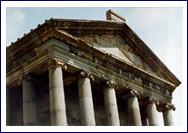
    destination. Numerous monuments and masterpieces of the Ancient era
    and Middle Ages can be found throughout the country. Tourism in
    Armenia is rooted in the country's historical landmarks and
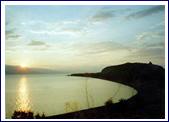
    natural attractions such as the water resorts of Lake Seventh hot
    springs of Arzni and Jermuk, the forests of Dilijan, Aghveran,
    Tsaghkadzor, Bjurakan and Gugark, and the mountainous natural caves
    and cliffs of the Southeast region. The 5165 meter Mount Ararat,
    geographically located in Turkey, is a national symbol of Armenia
    and is visible from much of the Southwest region.
      The majestic peaks of Mount Ararat provide a stunning
    backdrop to Yerevan. The monastery of Khor-Virab and the ruins of
    the ancient city of Dvin (dating back to the second century BC) are
    located in the mid-distance Aerial view of Yerevan, capital of
    Armenia Statue of Komitas, one of Armenia's most loved
    composers, outside the Komitas Conservatory. Apart from writing
    many original composition, Komitas travelled the country noting
    down folk songs for posterity Yerevan, which is nestled in the
    shadow of the snow-capped heights of the majestic mount Ararat,
    where the Biblical Noah's Ark first landed escaping the Great
    Flood, is the capital city of Armenia. With a population numbering
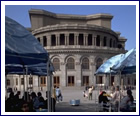
    over 1.2 million, Yerevan is a bustling city. The central plaza,
    Republic Square, is designed in the Armenian national style and
    houses the Government House, the Cabinet and other governmental
    offices as well as the Erebuni and Armenia hotels.

    Also situated on Republic Square are the Armenian History Museum
    and the Art Gallery of Armenia. Here, one finds informative and
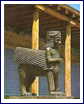
    interesting models and artefacts of ancient Urartu and Armenia. In
    the Art Gallery one finds a worthy section on Armenian art from the
    seventh century AD. Amongst the many other museums in the capital
    city, the two most interesting house museums are those of landscape
    artist Martiros Saryan (1880-1972) and twentieth century composer
    Aram Khatchaturyan.
     Yerevan, the ancient capital of Armenia, extends you a
    warm and friendly welcome. It is one of the oldest cities in the
    world. The earliest recorded settlement there dates back to 782 BC.
    King Argishty I founded a fortress city in the north-eastern part
    of present-day Yerevan, with the following cuneiform inscription,
    “With the majesty of God Khald, Argishty, son of Menua, built
    up this inaccessible castle and named it Erebuni…” You can
    still see relics from this part of our history at the Erebuni
    Museum in Yerevan.

    As you explore the many interesting sights in Yerevan, you will
    learn about the culture and history of one of the world's
    oldest nations.

    If you would like more information about Armenia, contact the
    author of this article, Mr Mushegh Gevorgyan, who can assist with
    tours, visas and translation services: tours@orient.am


  • Know Your Riyals from Your Kwatcha

    Need to convert currency?

    Take a look at The
    Globetrotters Currency Converter
    – get the exchange rates for
    164 currencies The
    Globetrotters Currency Cheat Sheet
    – create and print a
    currency converter table for your next trip.


  • Country Statistics: highest population density

    Country tatistics: highest population density.

    Rank

    Country

    Population

    Area (km²)

    Density

    World

    6,445,398,968

    510,072,000

    13

    1

    Macau

    449,198

    25.40

    17,685

    2

    Monaco

    32,409

    1.95

    16,620

    3

    Singapore

    4,425,720

    692.70

    6,389

    4

    Hong
    Kong

    6,898,686

    1,092

    6,317

    5

    Gibraltar

    27,884

    6.50

    4,290

    6

    Gaza
    Strip

    1,376,289

    360

    3,823

    7

    Vatican
    City

    921

    0.44

    2,093

    8

    Malta

    398,534

    316

    1,261

    9

    Bermuda

    65,365

    53.30

    1,226

    10

    Maldives

    349,106

    300

    1,164

    Source:
    http://en.wikipedia.org/wiki/List_of_countries_by_population_density


  • Mutual Aid

    Need help? Want a travelling buddy or advice about a place or
    country – want to share something with us – why not visit our
    Mutual Aid section of the Website: Mutual
    Aid

    Monique is looking for people to share a jeep from beginning
    September to middle September for a trip down the Rift Valley lakes
    and into the southwest tribal areas. Cost is 120 USD per day, no
    matter how many people to the jeep – I will arrive in Addis on Sept
    2nd and would prefer to leave the 3rd or 4th of September for a
    15-18 days trip (flexible because of market days and so on).
    Monique can be contacted by e-mail: moniquejansen66@hotmail.com or
    monique.jansen@chello.be. She says that she is a freelance
    photographer, so her main goal is: people, villages, markets, less
    wildlife, birds. If this interests you, why not drop Monique a
    line.

    Here's a little Beetle quiz based on capital cities. See how
    many you get right! Go on, have a guess!

    What is the capital city of the following countries:

    1. Senegal
    2. Singapore
    3. Sierra Leone
    4. San Marino
    5. Suriname

    For the answers, see at the end of the e-newsletter.


  • Traveller's Diseases: Bird Flu

    What is it: there are believed to be at least 15 different
    types of avian flu that routinely infect birds around the world.
    The current outbreak is caused by a strain known as H5N1, which is
    highly contagious among birds and rapidly fatal. Unfortunately,
    unlike many other strains of avian flu, it can be transmitted to
    humans, causing severe illness and death.

    How do I get it: human cases have been blamed on direct
    contact with infected chickens and their droppings. People who
    catch the virus from birds can pass it on to other humans, although
    the disease is generally milder in those who caught it from an
    infected person rather than from birds.

    What happens if I get it: bird flu can cause a range of
    symptoms in humans – some patients report fever, cough, sore throat
    and muscle aches. Others suffer from eye infections, pneumonia,
    acute respiratory distress and other severe and life-threatening
    complications.

    Diagnose and treatment: flu drugs exist that may be used
    both to prevent people from catching bird flu and to treat those
    who have it. Currently there is no vaccine, although scientists are
    working to develop one.

    How can I avoid contracting rabies: the World Health
    Organization recommends that infected or exposed flocks of chickens
    and other birds be killed in order to help prevent further spread
    of the virus and reduce opportunities for human infection. However,
    the agency warns that safety measures must be taken to prevent
    exposure to the virus among workers involved in culling.


  • Have you got a tale to tell?

    If you have a travellers tale that your aching to tell. Then why
    not visit the “Travel Sized Bites” section of the Website
    and share it with the world. Travel Sized Bites


  • First Impressions by Sue Button

    From 25,000 feet the view of the Tanzanian coastline with its coral
    reefs, long sandy bays and azure blue sea looks like a classic
    glossy travel brochure. And the 15-minute drive from Mtwara airport
    reveals tantalising glimpses of the Indian Ocean between the exotic
    display of palm and baobab trees. But as we enter Mikindani village
    I'm looking more carefully at the scenery – for me this
    isn't an exotic holiday destination; this is to be my home.

    I've already been advised that the first two weeks will be in
    'Homestay' i.e. living with a local family, so I'm
    interested to see what the local homes look like. I know that I
    won't be staying in one of the daub and wattle huts, but in one
    of the old stone houses. Sounds good. But the first stone houses
    that we pass, although inhabited, appear to be in total ruin..?

     Becky introduces me to my host, Mr Sijaona. He is a

    small wiry man with a purposeful stride. He welcomes me into his
    house. I gaze around at the crumbling walls and the total lack of
    comfort. But then he says in halting English that his other house
    is better, (two wives, therefore two houses) – so I pick up my
    suitcase and follow him down the dusty street.

    His other house is in a rather worse state of disrepair. The
    ceiling of the front room is in a pile behind the door. I can't
    see much detail, as the inside of the house is inky black after the
    bright sunshine outside. He pulls aside an old piece of cloth to
    show me to my quarters. I have arrived.

    I can't deny that during that first evening I wonder what on
    earth I'm doing. Waves of panic alternate with interest, and
    frustration. I want to ask a hundred questions; which is your wife
    and who are all the other girls, children and women; what are we
    going to eat for dinner and how is it prepared, how does the family
    get water, how many people live in this house,…. but I
    can't seem to make myself understood, or at least the answers
    in halting English don't match my questions. I'm clutching
    my 'Teach Yourself Swahili' but at this stage it might as
    well be 'Astrophysics for Beginners'.

    By Day Four I'm beginning to make a bit more sense of my
    surroundings. I've wandered around the Boma and its grounds,
    visited a couple of schools, explored the village, the waterfront
    and the yacht club, but more importantly had time to watch and chat
    to local people. 'Chatting' takes the form of sign
    language, my pathetic attempts at Swahili greetings, and local
    people's various standards of English. Mr Sijaona and his
    family are being wonderfully patient and helpful. I went with him
    yesterday to water his garden and help him plant sweet potatoes.
    Yesterday morning wife number 2 (you see, I am beginning to
    find things out) sat with me for over an hour teaching me how to
    plait grasses into a tape which forms the basis of a mat. And this
    morning Mr Sijaona showed me how to weave a basket from palm
    leaves.

    They are delighted to teach me these things and are willing me to
    absorb the Swahili they keep throwing my way. If only I could
    absorb it all quickly. But it's “Pole pole catchy
    monkey”. I'll get there!


  • No of Visitors to S Africa Falls

    Whilst the value of the Rand has strengthened, the number of
    non-African visitors to South Africa dropped 2 percent in November
    2004, to 198,605 people. French arrivals fell by 23 percent, to
    13,142, and the number of German tourists fell 4.3 percent, to
    33,495.


  • Mac's Travel Reminiscences


    We are sorry to say that Mac is not very well, but he is still
    e-mailing strong and recently sent the Beetle a collection of
    travel reminiscences about Australia, camels which takes us to
    India and then back to Australia.

    In Alice Springs Australia I stayed in an Anglican (Church) Hostel.
    I was pleased but surprised that they sold
    beer in this church hostel. Nothing wrong with this especially
    since it was Australia but something different. When we arrived in
    Alice Springs the bus driver got a broom and swept off the dust
    from our suitcases. I guess the Coober Pedy, where the author of
    article below stared his safari from was that town, that was mostly
    underground as it was so hot. Even the chapel or church was underground where I went to Midnight Mass on Christmas Eve.
    They dug and searched for emeralds underground. You
    paid a few dollars and you could dig for same.

    I think maybe they planted inferior or cheap emeralds so tourist
    could discover them but maybe it was genuine. On our bus going to
    the outback there were two drivers, double springs, double air
    conditioning and one tub full of ice in aisle way where people put
    beer (it was the Holidays). We stopped at one out of the way shack
    and it was full of grizzled natives.

    We had a British lady with us that was dressed as if she was going
    to a party at Buckingham Palace and she carried a dainty parasol.
    The grizzled natives decided they would have some fun with this
    British lady. They said. You know when Prince Philip was in
    Australia he went with a native girl. The lady replied “Good
    for him!” It turned out she was a journalist and had been
    around and could pass out the repartee too. I used the term Safari
    which in Africa means any kind of journey I am told, but don't
    know if they call them that in Australia.

    I am reminded of camels. One of the reasons I did not enjoy a camel safari in Rajasthan was because we
    did not have an entertaining fun group of people and
    we did not see much except sand dunes. I am a sightseer and want to
    see things. Ha! It was kind of boring but another time I might have
    enjoyed it. I really did enjoy the cities with their castles and
    their colourful people in colourful garb in Rajasthan and it was
    kind of medieval or something. It was just that I was kind of out
    of sorts on that day of camel riding. Sometimes on a lengthy trip
    you need to stop travelling and just sleep or rest for a day or two
    (kind of a vacation within a vacation) and then continue on. I was
    trying to see all of India in one trip. I later returned two more
    times and by then I was more adjusted to India and really enjoyed
    it. I only recommend India though to people that can kind of rough
    it and don't get too upset by poverty. Poverty in warm
    countries where they have large family support does not bother me
    as much as poverty in cold countries. I saw a lady in Nepal sitting
    on the ground trying to sell six peanuts. Come to think of it,
    tourists were giving her money so maybe she knew what she was
    doing.

    Back to Australia: there is an article in the January 2001
    Smithsonian Magazine titled For Dromedary Trekkers in
    Australia's outback its Camelot in the Desert by Derek
    Grzelewski, photographs by Mark S Wesler. The Author had seen a
    sign earlier on a camel farm “For those of you who have never
    ridden a camel we have camels that have never been ridden
    before”. Here is a condensation of the rather lengthy but
    interesting article.

    It was a 150 mile desert trek on two dozen dromedaries from
    Archaring Hills north of Coober Pedy toward Witjaira National Park.
    The camels go in single file with three weeks of provisions (swags
    (sleeping rolls) and 100 gallons of water). The human participants would
    ride only an average of two hours a day taking turns sharing the
    two camels that were not carrying supplies and equipment. The rest
    of the time they walked beside the camels. (Me/Mac speaking now: I
    one time took about a two hour safari on camel out of Rajasthan
    India. Maybe it was a half day. I had forgotten about it until I
    read this article. The camels and their keepers in Australia
    originally came from Rajasthan, India or Northern India and
    Pakistan. The five seasoned cameleers and eight adventurers in
    Australia might have been on camels that were ancestors of the
    camel I tried to ride.

    The author describes the trip as a gentle rocking motion that one
    could read a book while riding. (Me, I remember my ride as mildly
    uncomfortable. My camel was smelly and had bad breath worse than
    mine. In Egypt outside Pyramids the touts will tell you if you are
    an American that your camels name is Coca Cola. If you are Canadian
    they will tell you that your camels name is Canadian Club, if
    German your name is Heineken. Same camel. I disliked the camel I
    rode in Rajasthan so much that I did not ask its name.

    All I could think of was I want to get back to civilization and get
    a cold beer. We had no beer with us. Perhaps it was forbidden.
    Drunken tourists and drunken camels would have been more fun.
    Camels can do without water for weeks but I couldn't go a
    couple of hours without beer. Camels can travel 600 miles without
    drinking if food is succulent (plants) and the air cool. These
    camels and handlers (known as Afghans or simply Ghans) brought from
    India many years ago were used to haul supplies to remote mines and
    sheep stations. Also sleepers for the Transcontinental Railway and
    the first piano arrived in Alice Springs lashed to the hump of a
    camel. Between 10,000 and 20,000 were released to the desert to
    fend for themselves when the Ghans became unemployed and could not feed their camels. The camels
    thrived in the desert and doubled their population every six to ten
    years.

    There are now as many as 40,000 out in the desert. “The once
    unsurpassed beast of burden became simply a beast and a
    burden.” Now the Australians find camel meat lean and tasty
    and the fur and hides are used for crafts and clothing. The author
    did not say how much trip cost. Mine out of Rajasthan was
    reasonable and I got it from one of their Government sponsored
    hotels in Rajasthan. Now for a quiz for my generation: was the Arab
    on the package of Camel cigarettes riding the camel, standing
    beside the camel or leading the camel? Answer: he was not sitting
    on the camel, standing beside the camel or leading the camel. He
    was behind the pyramid in the picture taking a sh_t.

    Happy Camel Riding. Mac


  • Axum Obelisk

    The Axumite kingdom in northern Ethiopia was established between
    200 and 100 BC and was once one of the four kingdoms of the world.
    The legendary Queen of Sheba reigned in the region eight or nine
    centuries later. The region is home to some of the world's
    obelisks carved with 'doors' and 'windows' and are
    thought, like Stonehenge, to have some solar or astronomical
    measuring role. One of the obelisks was looted from Axum by
    Mussolini in 1937 and in 1947, Italy signed a pledge to the UN to
    give back the obelisk – but has not followed through until now. The
    obelisk – the only one on two continents weighing over 100 tonnes –
    was situated in a square in Rome in front of what was once the
    'Ministry for Italian Africa' (now the FAO building). The
    obelisk has been cut into three sections, and has been awaiting its
    return in a warehouse near Rome airport. The top piece of the
    obelisk is now scheduled to leave Rome on a cargo plane in April
    but this has been postponed because the Italian culture ministry
    says Axum airport does not have radar, so the pilots must wait for
    good weather.